
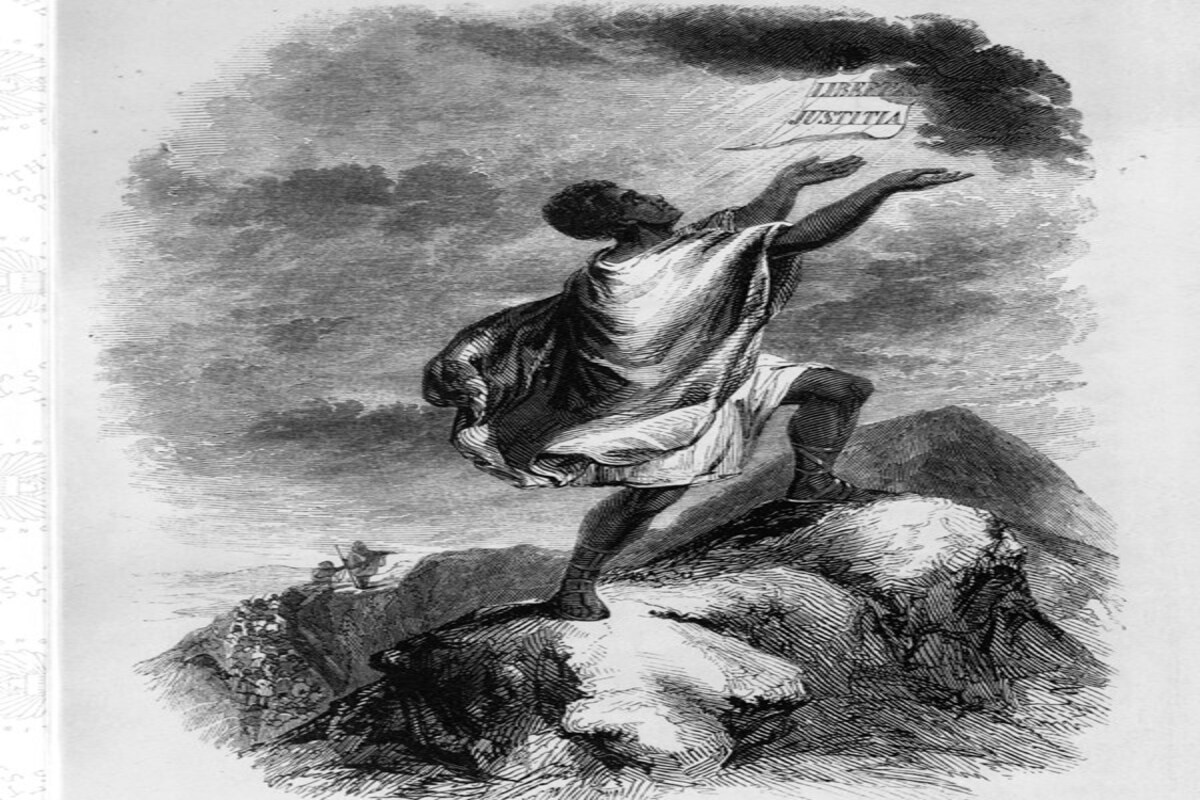
Discovering an Identity at Heart
Albeit an academic blog, I created this platform as a means of self-exploration. Modern society, with its endless marketing schemes, causes one to become a stranger to themselves. Corporations harvest our data to manufacture versions of us that drive profit. They tell us what we should eat, whom to praise, how to have fun—hell, they even tell us how to blink. I am stressed from being pulled in so many different directions. I feel like a yoke binds my neck, with the latest trends herding me to refashion myself. The man in the mirror has become unrecognizable. I’ve grown uncomfortable with seeing myself through the lens of another and wish to see myself as I am: an African American Presbyterian.
While I wished to conform my identity to the generation’s aesthetics, reflecting on my grandmother’s catechesis convicted me. Why do I seek to hide what God called good? Do I not recognize who I am? “Study to know who you are,” my grandma said as she assigned me to research various African American figures. As many children would, I resented her for replacing play time with reading. Playing with my wrestlers was better than being lectured on family history. Fortunately, these lessons have never left me and guide me as I mature into the man God made me to be. Her instruction has allowed me to cherish my uniqueness and has made me eager to build on the foundation she laid. Therefore, I labor to understand myself as I study African American History and Theology.
Who is the Black man in America?
The aim of studying African American History is to comprehend who the Black man is in America. The portrayal of African Americans’ narrative frequently revolves solely around oppression. Even though African Americans have accomplished much, educators often neglect to offer a comprehensive view of the African American experience, causing young African Americans to believe slavery alone defines their existence. However, I advocate for a narrative that includes the “and”—recognizing that African Americans were enslaved “and” they persevered to build stable communities, contribute to the nation, and continue to strive in spite of setbacks. Thus, I approach this study with the firm belief that America is where the Black man belongs. His people have died here, fought here, and married here. The African American has made America his home through the grace of the Triune God. Consequently, my historical inquiry highlights African Americans’ struggles, achievements, and contributions, acknowledging the pain of oppression and the resiliency of Black people.
Who is God?
The aim of exploring Theology is to comprehend who God is. As Turretin states, “The object of any science is everything specially treated of in it, and to which all its conclusions relate.”1 Therefore, God is said to be the object of Theology because all theological inquiry begins and ends with God. It is man seeking to know God and how all things (humans, animals, plants, etc.) relate to Him using divine revelation and reason. My beliefs as a Presbyterian will outline all theological research, from the selected topics to my stance on theological concepts. However, I will incorporate insights from the broader Catholic tradition where they complement scripture. Moreover, the theological findings will serve as a foundation for understanding its relation to the African American experience.
Collective Adventure
Join me as I navigate the intersections of identity, history, and faith. Through thoughtful articles, discussions, and reflections, I aim to:
- Illuminate the roots of African Americans with the light of divine revelation.
- Encourage educators, students, and the broader community to embrace American History and Theology comprehensively.
Together, let’s shape conversations that honor the past while inspiring future generations.
NOTES
- Francis Turretin, Institutes of Elenctic Theology, ed. James T. Dennison, trans. George Musgrave Giger, vol. 1 (Phillipsburg, NJ: P & R Publishing, 1997), Topic I, Q.I, V ↩︎
BIBLIOGRAPHY
Turretin, Francis. Institutes of Elenctic Theology. Edited by James T. Dennison. Translated by George Musgrave Giger. Vol. 2. Phillipsburg, NJ: P & R Publishing, 1997. Originally published in 1679.
heart
heart, heart,heart,heart,heart