
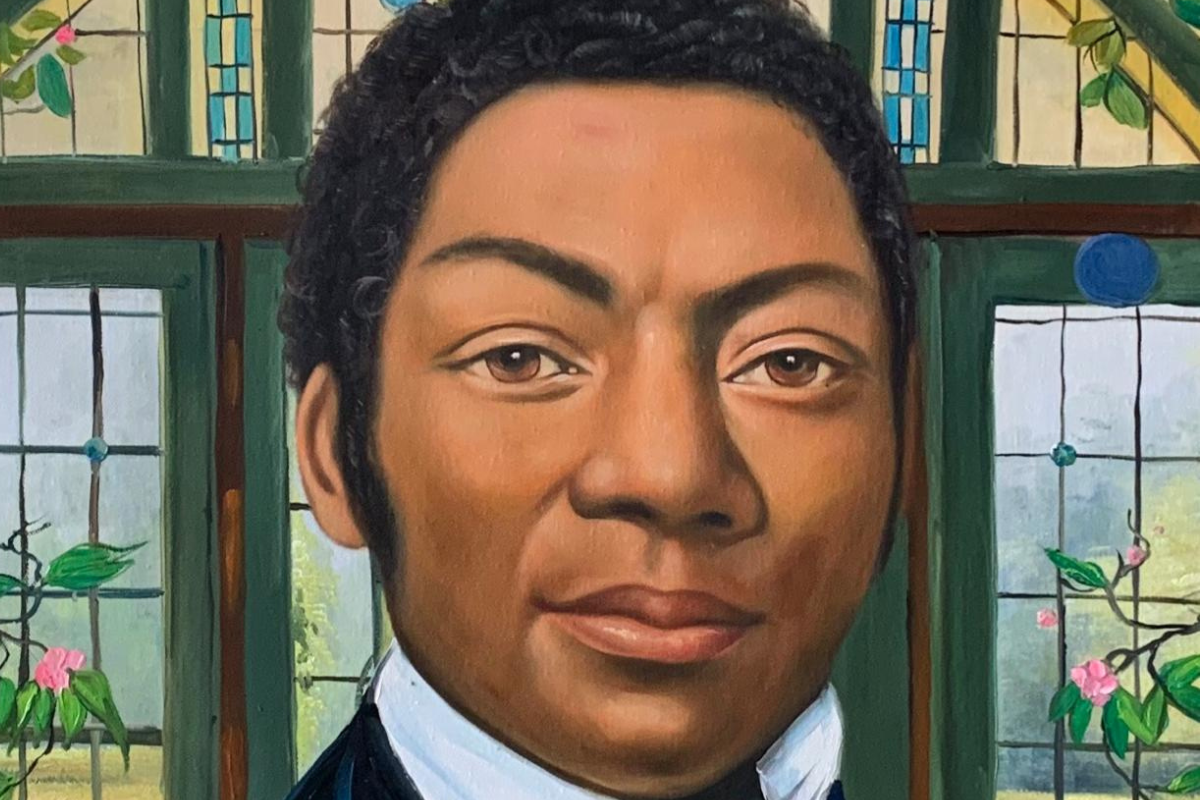
“I am American to the Backbone,”
Key Takeaways
– Pennington’s enslaved past fueled his fight for freedom, turning him into an abolition advocate.
– Among the first class of Black abolitionists
– Pennington’s grace fueled path provides a roadmap to understanding the African in America
Early Life
James W.C. Pennington’s early life was marked by the harsh realities of slavery. Born in 1807 on the Eastern shore of Maryland, Pennington was raised in slavery by his parents. Living under abject circumstances stirred his desire to shake the yoke of bondage. Although countless reasons contributed to Pennington’s escape, watching his father mercilessly beaten and his mother threatened solidified his decision.
Only eighteen years old at the time, he knew he might be putting his family in additional danger; nevertheless, he was determined to be free, whatever the cost. After several days of harrowing adventure and near recapture, he found his way to a Quaker family in Pennsylvania that was part of the network of the Underground Railroad.
Conversion
While living with the family of a Presbyterian elder, Pennington had a spiritual crisis. Grateful that he was free, he agonized about the plight of those still in bondage, especially when he became cognizant of the size of the enslaved population. At the same time, he became convinced of his bondage to sin. “It was while I was engaged thus that my attention was seriously drawn to the fact that I was a lost sinner, and a slave to Satan; and soon I saw that I must make another escape from another tyrant,”1 he wrote. Under the influence of a visiting pastor, Samuel H. Cox, who later became a moderator of the General Assembly in the New School Presbyterian Church, Pennington was brought to a saving acquaintance” with Christ.
Education
Successfully escaping his confines, Pennington sought education, despite being largely illiterate at the time. Through the help of Quaker families, Pennington learned to read and write and was introduced to the Bible for the first time. He worked as a blacksmith in Newtown, Long Island, attending evening school and receiving private tutoring to further his education. The climax of his academic career would come at Yale University.
The first African American to study at Yale, Pennington was exposed to prejudice. He was refused enrollment in the school and barred from speaking in class. Thus, he was effectively a visitor in the lecture hall. He was required to sit in the back of the classroom and listen. Borrowing books from the library was off-limits as well. Despite facing discrimination, he was able to attend Yale Divinity School for three years, where theologian Nathaniel Taylor profoundly influenced him. This period of his life laid the foundation for his remarkable journey toward becoming a prominent minister and social activist.
Significance
- In 1841, he published “A Textbook of the Origin and History of the Colored People,” which scholars have described as the first textbook devoted to the history of African Americans.
- His memoir, “Fugitive Blacksmith,” was so popular in England that it went through three editions in two years.
- In 1843, he was selected as a delegate to the second World Anti-Slavery Convention in London.
- Among the first class of black abolitionists
Works
- A Textbook of the Origin and History of the Colored People
- Fugitive Blacksmith
NOTES
- James W. C. Pennington, The Fugitive Blacksmith; Or, Events in the History of James W.C. Pennington, 3rd ed. (London: Charles Gilpin, 1850), 52. ↩︎
BIBLIOGRAPHY
Cummings, Mark. “In the Shadows No More: YDS Honors Minister James W.C. Pennington.” YaleNews, September 30, 2016. https://web.archive.org/web/20200716173240/https://news.yale.edu/2016/09/30/shadows-no-more-yds-honors-minister-james-wc-pennington ; http://archive.today/hhwuH.
Log College Press. “James William Charles Pennington (1807-1870),” n.d. https://web.archive.org/web/20191215182344/https://www.logcollegepress.com/james-william-charles-pennington-18071870/ ; http://archive.today/8BJRH.
Pennington, James W. C. A Text Book of the Origin and History, &c. &c. of the Colored People. Hartford: L. Skinner, Printer, 1841. https://web.archive.org/web/20211020143643/https://static1.squarespace.com/static/590be125ff7c502a07752a5b/t/5a4da6e053450aa56e2152da/1515038468432/Pennington%252C+James+W+C+-+Text+Book+-+edited.pdf ; http://archive.today/aDwWT.
Pennington, James W. C. The Fugitive Blacksmith; Or, Events in the History of James W.C. Pennington. 3rd ed. London: n.p., 1850. https://static1.squarespace.com/static/590be125ff7c502a07752a5b/t/5a4715f2652deacfabaa848d/1514608120490/Pennington%2C+James+W.C.%2C+The+Fugitive+Blacksmith.pdf ; http://archive.today/LzTc9.
Presbyterian Historical Society. “James W.C. Pennington: Fugitive Slave to Evangelical Abolitionist,” 2017. https://web.archive.org/web/20170218131536/https://www.history.pcusa.org/blog/2017/02/james-wc-pennington-fugitive-slave-evangelical-abolitionist ; http://archive.today/IyCvB.
Webber, Christopher L. American to the Backbone. Simon and Schuster, 2011.